 marinepoint


End-of-season outboard winterising checklist
2026-08-24 · Marine Point
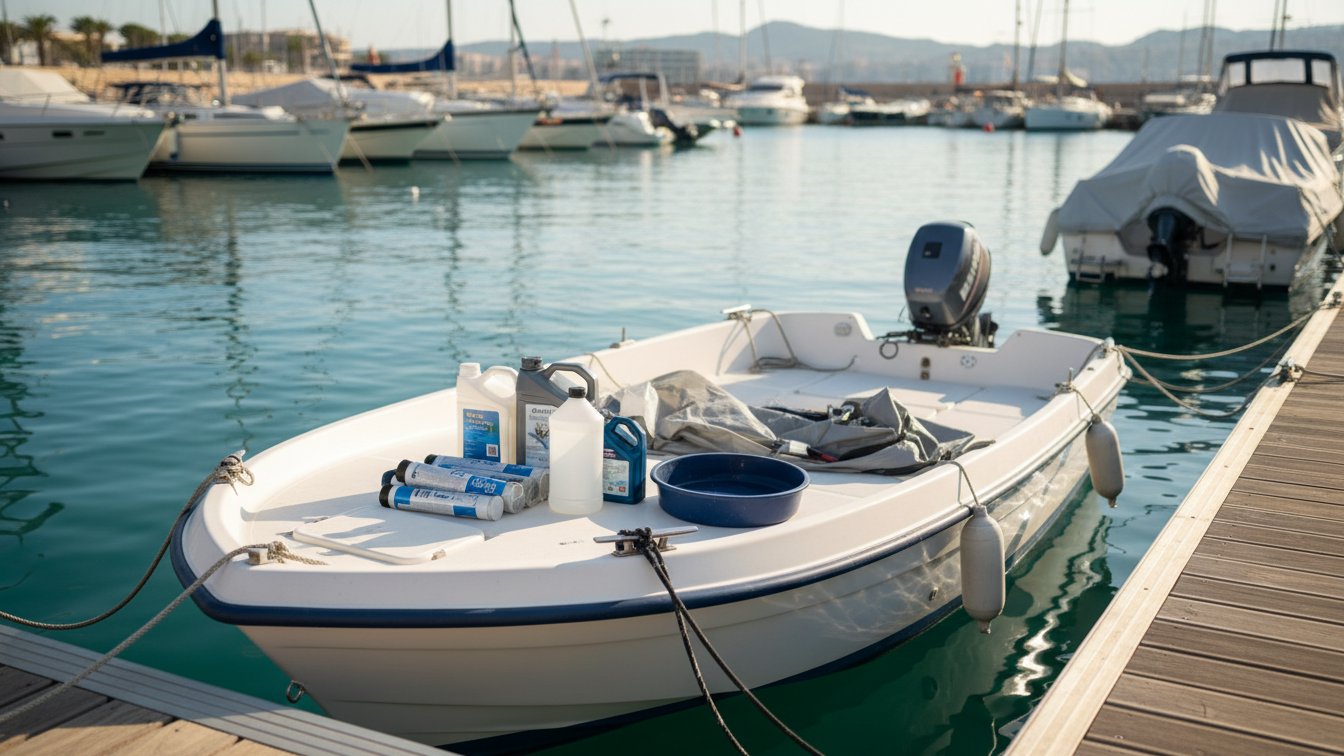
When outings tail off after the summer, spending some time winterising the outboard prevents plenty of breakdowns when you sail again. In the Balearics, the heat, the salt and the idle spells after an intense season mean this job shouldn't be left to the last minute. We recommend following each engine's manual and calmly going over the basics: oil, fuel, greasing and storage position. If we spot wear, leaks or anything running oddly, the sensible thing is to bring in a professional.
Change the oil and check the lower unit
The engine oil and the gearbox lubricant should be checked with the engine at the temperature and under the conditions its manufacturer specifies. At the end of the season it is worth replacing them if the maintenance schedule calls for it, since used oil can hold moisture, residues and particles accumulated over months of use.
When draining the gearbox oil, look at how it comes out. A milky appearance can mean water getting in and calls for a professional check before laying the boat up. We also recommend inspecting plugs, seals and the propeller area, removing fishing line, rope ends or dirt that may have wrapped around. Putting off a suspected leak until next spring is not a good idea.
To prepare these jobs, you can browse our engine and sterndrive spares category, always verifying compatibility with your outboard's model and serial number.
Stabilise the fuel properly
Petrol ages, and it can cause problems if it sits untreated for a long period. Before parking the engine for the season, we recommend considering a suitable fuel stabiliser and applying it exactly as instructed by both the product's manufacturer and the engine's.
After adding it, the engine usually needs to run for the indicated time so the treated fuel reaches the whole circuit. Don't improvise proportions or mix products without confirming they are compatible. If in doubt about the state of the fuel, the type of tank or the right procedure, it is better to ask for technical advice.
It is also important to check hoses, connections and the primer bulb for stiffness, cracks or leaks. The salty air and high temperatures of the Balearic season age some rubber components faster.
Grease and protect the moving points
Greasing helps preserve the mechanisms that work hardest: steering, tilt, lock, linkages and the other points listed by the manufacturer. Use only the recommended lubricant and don't apply grease anywhere the maintenance plan doesn't call for it.
Take the chance to clean the outside with fresh water and an appropriate product, removing salt and dirt. Once dry, check the condition of anodes, visible fasteners, brackets and cables. Early corrosion is far easier to deal with now than after several months of lay-up.
Store the outboard in the right position
The storage position is no small detail. Normally the outboard should be left vertical to help drainage and stop residual water sitting in sensitive areas, but always confirm the specific instruction in the manual. If the boat is stored ashore, protect the engine from dust, rain and sunlight without completely blocking ventilation.
Before calling the winterising done, note down the tasks completed and any parts still pending. That way, when activity picks up again between spring and summer, you will have a clear basis for the fit-out. If you need to confirm compatibilities or track down spares, you can write to us from contact: we will recommend what you need, not what costs most.